

Korean B2B Website for Foreign Manufacturers
Let Korean buyers find your products on Naver, forward spec sheets internally, and route each inquiry to you or your distributor. What to build first.
A Korean B2B website for a foreign manufacturer has three jobs: let Korean engineers and buyers find your products in Korean on Naver and Google, give them specifications and certificates they can forward inside their company, and send each inquiry to whoever answers it, you or your Korean distributor. In practice that means a Korean product catalogue with HTML spec tables, a short inquiry form, a KakaoTalk contact and a CMS your distributor can update. A dealer ordering portal can come later.
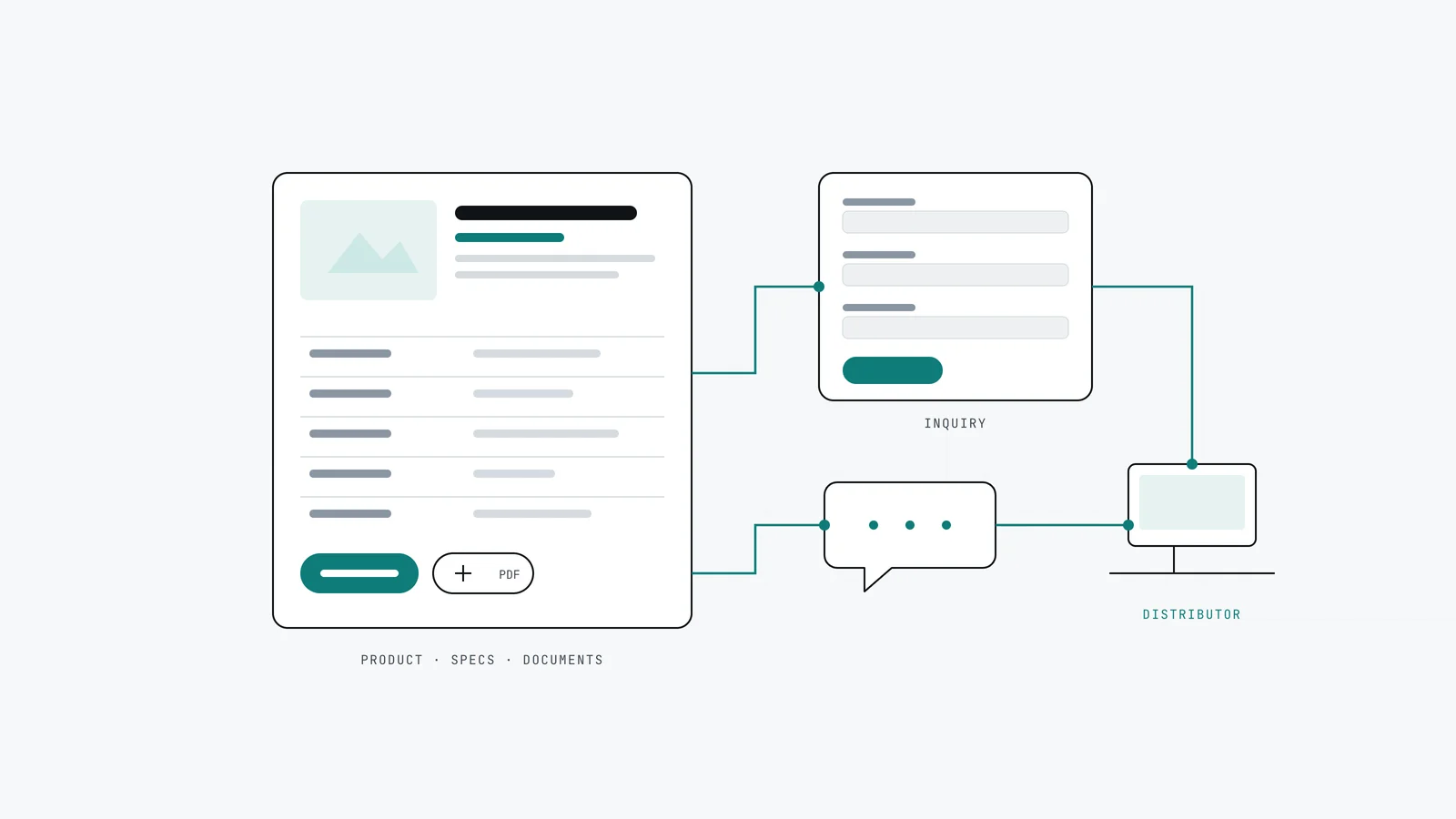
This guide covers who reads a Korean B2B site, how to structure the catalogue, how to route inquiries between head office and a distributor, and what it costs.
Who reads a Korean B2B site, and what do they need?
| Reader | What they look for | What serves them |
|---|---|---|
| Engineer or technical evaluator | Specifications, drawings, compatibility, test data | Spec tables in Korean with model numbers in their original form, downloadable data sheets |
| Purchasing staff | Who sells it in Korea, lead times, how to request a quote | A clear distributor or contact page and a short quote request form |
| Distributor's sales team | Up-to-date product pages and documents to send to customers | Pages and files they can link to, and a CMS login to update Korean content |
| Management or approvers | Whether the supplier is credible and established in Korea | Company overview, certifications, Korean references or case pages |
Most Korean B2B visits end in a document being forwarded or an inquiry being sent. Design every product page so both are one click away.
How should the Korean catalogue be structured?
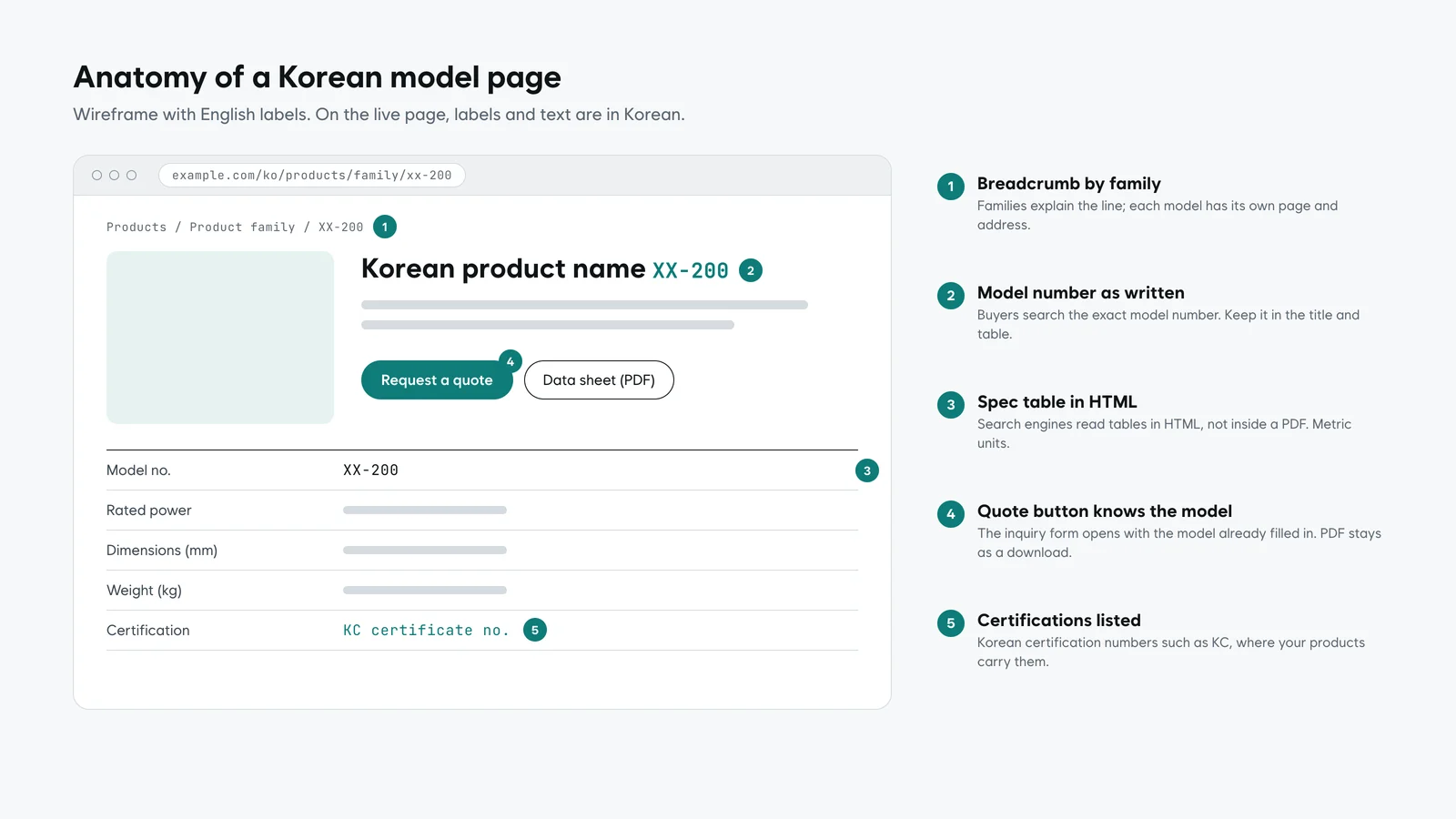
- Families, then models. A family page explains the product line in Korean; each model page has the spec table, documents and an inquiry button that already knows which model is being asked about.
- Spec tables in HTML, not only in PDFs. Search engines read HTML tables; a PDF-only catalogue gives Naver and Google little to match. Keep the PDF as a download for people who forward it.
- Model numbers as they are. Korean buyers search for the exact model number. Keep it in its original form in the page title and table, next to the Korean product name.
- Metric units and Korean labels. Use SI units and Korean column labels, with the English term in brackets where engineers know it better.
- Certifications and documents. List Korean certification numbers such as KC where your products carry them, plus data sheets, manuals and test reports in Korean where you have them.
- Where to buy. Every product page should say who sells it in Korea and how to reach them.
Who answers the inquiries?
Decide this before the form goes live. A Korean buyer who writes in Korean and waits days for an English reply has every reason to ask someone else.
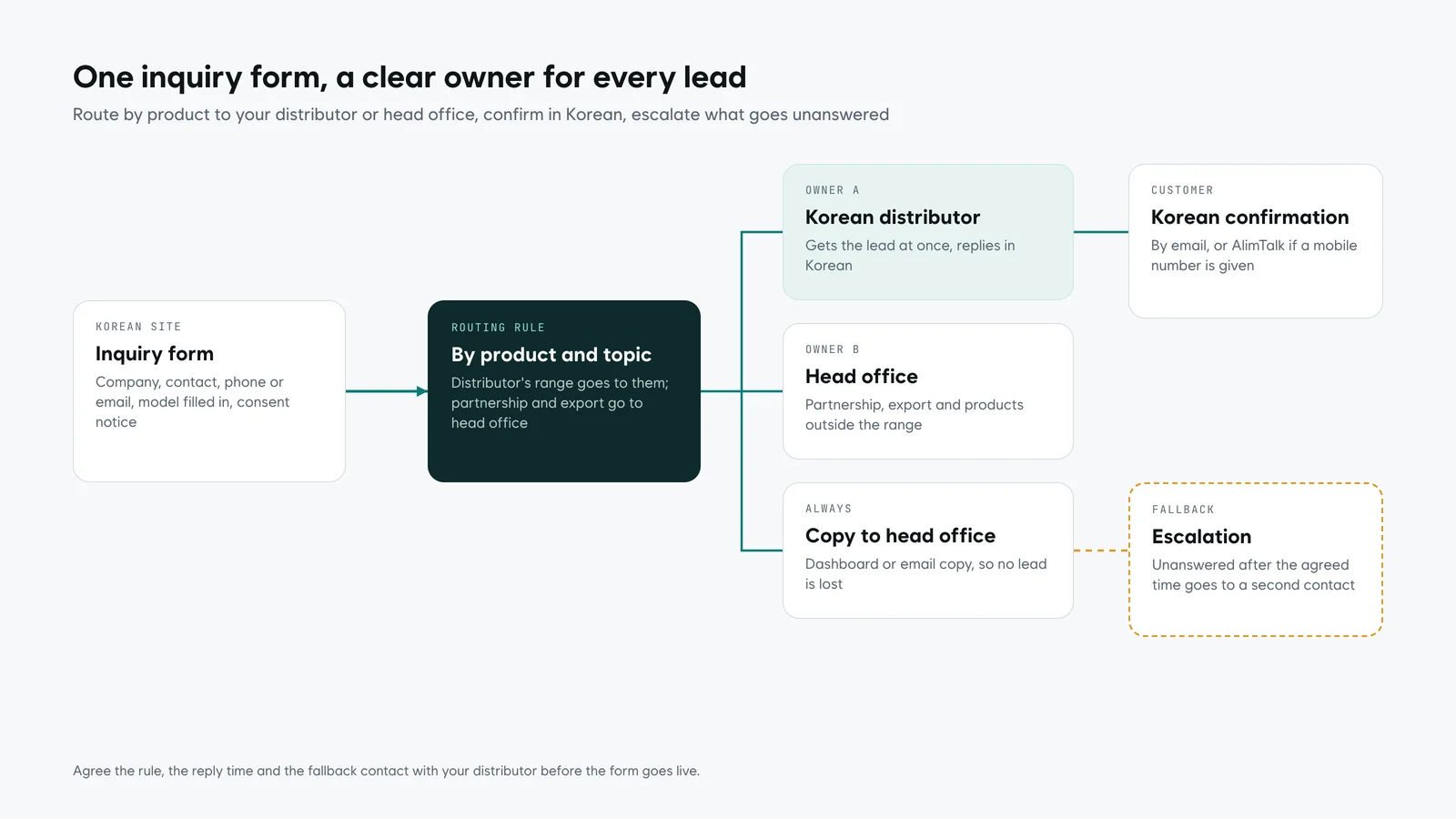
A routing rule that works for many manufacturers:
- Product and region decide the owner. Inquiries for products your distributor carries go to the distributor; others, and anything about partnership or export, go to head office.
- Both sides see every inquiry. The distributor gets the lead immediately; head office gets a copy or a dashboard view, so no lead is lost if someone is away.
- The customer gets a Korean confirmation by email, or by KakaoTalk AlimTalk if you collect a mobile number.
- Unanswered inquiries escalate after an agreed time, to a second contact.
Keep the form short: company name, contact name, phone or email, the model (filled in automatically from the page), quantity or project details, and a short consent notice for the personal information you collect. Korea's Personal Information Protection Act expects you to tell people what you collect, why and for how long; have your adviser approve the wording.
Should the distributor run the Korean website?
| Setup | How it works | Fits when | Watch out for |
|---|---|---|---|
| Distributor's own site | The distributor lists your products on its site | One exclusive distributor, many brands on their site | Your product pages compete with everything else they sell |
| Korean section on your domain | /ko/ pages on your global site, edited by your team and the distributor | You want one brand and one set of product data | Needs a CMS with Korean editing rights |
| Separate Korean site you own | A Korean site in your name, with distributor accounts for editing | Several distributors, or a Korean entity | Two sites to keep in step with the global catalogue |
In every case, keep the domain, the CMS and the inquiry data in your company's name. If the distributor changes, the site, its search history and its leads stay with you.
How do Korean buyers find B2B suppliers?
Through Naver and Google, and through referrals that end with someone searching your name or model number. Three things help:
- Register the Korean pages with Naver Search Advisor and submit a sitemap, so Naver indexes them. The steps are in Naver SEO for foreign websites.
- Write Korean titles and descriptions that use the Korean name of the product category plus the model number.
- Make links look right in KakaoTalk. Distributors and buyers share links in KakaoTalk, which builds the preview from your Open Graph tags; a Korean page with an English preview title looks unfinished.
For the wider localisation list, including hreflang and Korean fonts, see the Korean website localization checklist.
When do you need a dealer portal?
Once distributors or larger customers order regularly, a portal saves both sides time: dealers sign in, see their own price lists, download documents and send order requests that land in your system. It is a web app rather than a website, and it often connects to the ERP or the Korean entity's books. Our guides to ERP for foreign companies in Korea and selling online in Korea cover the next steps.
What does a Korean B2B website cost?
From our pricing catalogue (version 1.1), in US dollars, excluding VAT:
| Item | Range (USD, excl. VAT) |
|---|---|
| Website, three tiers (the first is a simple CMS build) | 1,900 / 3,100 / 4,300 |
| Product catalogue module (5–10 development days) | 700–1,400 |
| Detailed inquiry or intake form | 450–1,100 |
| A second language on a site we build (each further language USD 150–300) | 200–550 |
| AlimTalk and SMS notifications (sending fees separate) | 200–550 |
| Dealer portal as a web app with sign-in and admin | 1,800–3,900 over 6–12 weeks |
We quote by the features a site needs rather than by page count, so a catalogue with a few hundred models costs more in data entry and migration than in design.
Our B2B and bilingual work
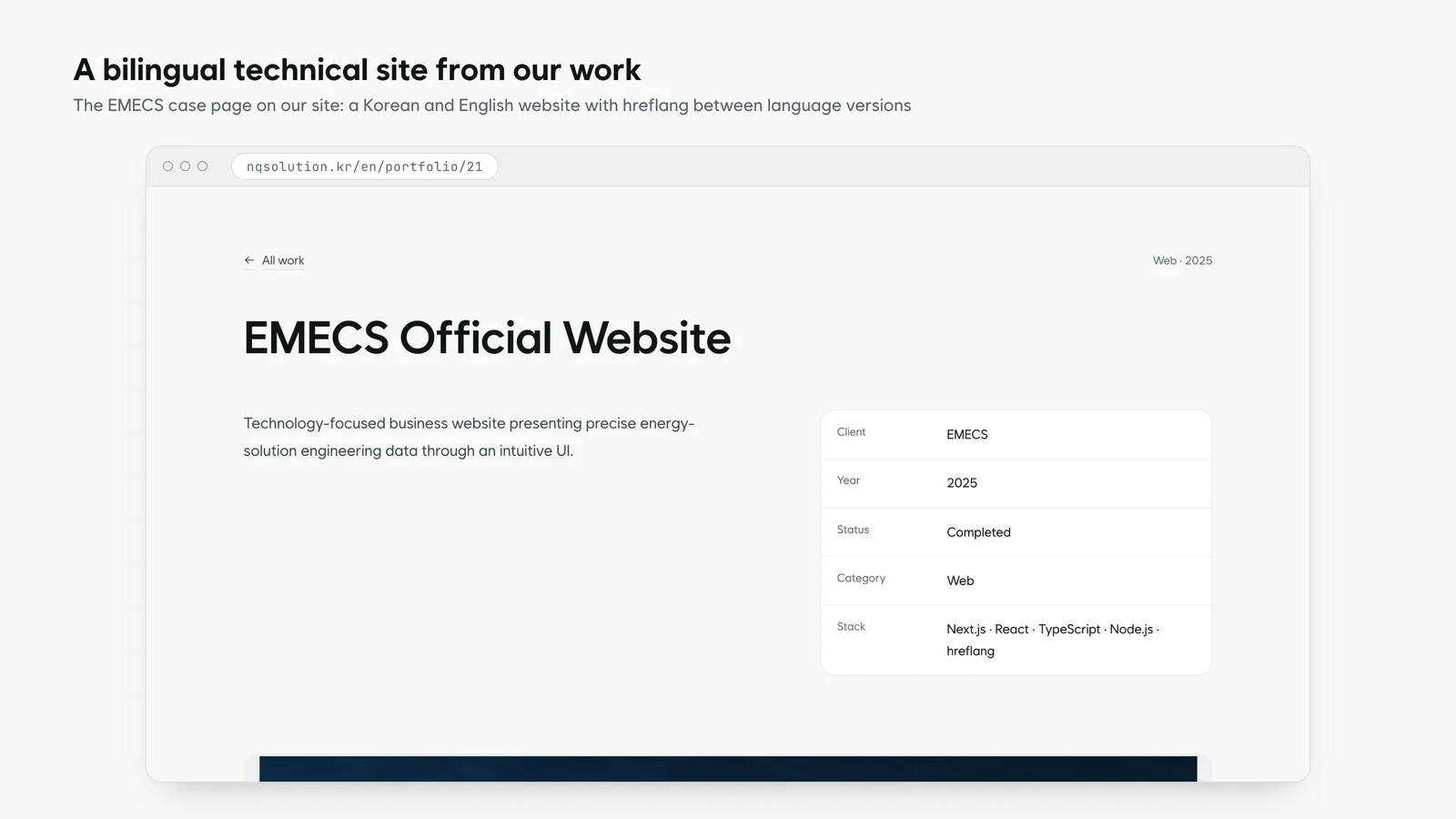
Our published work includes a B2B digital catalogue for a jewellery company, an online product catalogue for an industrial machinery manufacturer and a B2B website for a beverage company. For bilingual technical content, we built the Korean–English website for EMECS, an engineering company, with hreflang between the language versions, and the Korean–English platform for UNESCO i-WSSM, which is now in operation.
Our English-speaking founder runs consultations and documents directly, and we can meet you or your distributor in person in Korea. See more on our work page and on web development in Korea.
Frequently asked questions
Should my Korean distributor run the website?
The distributor can update content, but keep the domain, CMS and inquiry data in your company's name. A Korean section on your own domain, with editing rights for the distributor, keeps one brand and one set of product data and stays with you if the distributor changes.
Do Korean B2B buyers use Naver or Google?
Both. Register your Korean pages with Naver Search Advisor as well as Google Search Console, and make sure Naver's crawler can reach the site.
Do I need Korean specification sheets?
Korean spec tables on the product pages matter most, because they are what search engines read and what buyers compare. Korean PDF data sheets help when buyers forward documents internally. Keep model numbers in their original form in both.
Can the distributor edit the Korean site?
Yes, if the CMS gives them a role for Korean pages. We can set up an editor role that lets a distributor update Korean content and documents without changing the global pages.
How much does a Korean B2B website cost?
In our catalogue, a website is USD 1,900, 3,100 or 4,300 excluding VAT depending on the tier, plus modules such as a product catalogue (USD 700–1,400) and a detailed inquiry form (USD 450–1,100).
Sources
- NQ Solution pricing catalogue v1.1, in USD excluding VAT
- NQ Solution published work, EMECS case page, screenshot taken in 2026
- Korea Ministry of Government Legislation, Personal Information Protection Act
Bringing your products to Korean buyers?
Send us your product range, your distributor setup and how inquiries are handled today through the project request form. For the wider picture, start from the Korea market entry overview.